- Website: https://downunderctf.com/
- CTFtime: https://ctftime.org/event/2284/
- Writeups: https://github.com/DownUnderCTF/Challenges_2024_Public
Table of Contents
Team
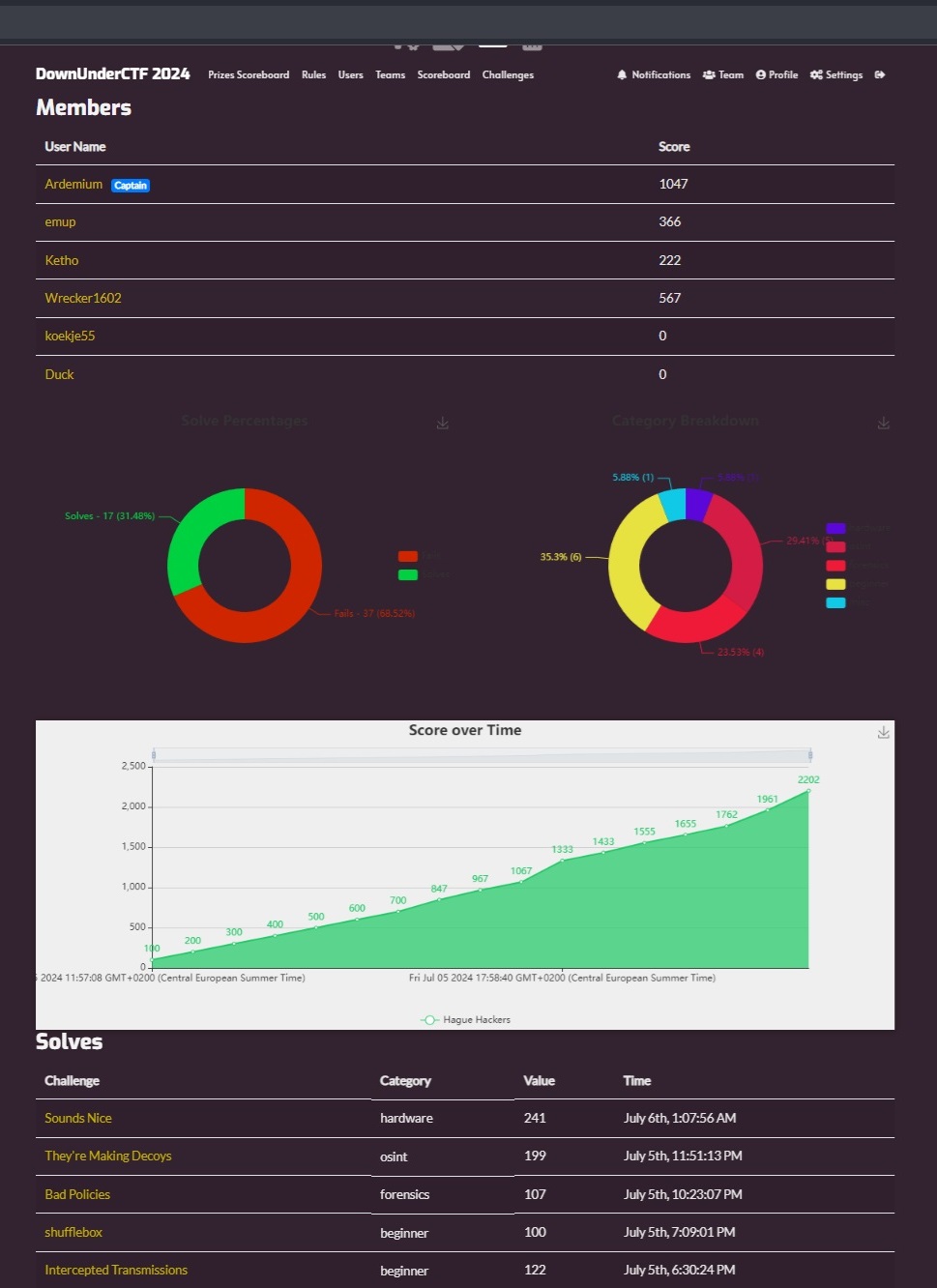
This was my first CTF event with Hague Hackers and we got place #124 with 2522 points 🙂. It is intended as an entry level CTF event for anyone to join. There were special categories for teams from Australian and New Zealand.
I personally did the Intercepted Transmissions, shufflebox and cityviews challenges and made progress on the other challenges with the team. I also tried Wacky Recipe but it was difficult and I have no idea why it was marked as easy.
Intercepted Transmissions
- category: misc
Those monsters! They’ve kidnapped the Quokkas! Who in their right mind would capture those friendly little guys.. We’ve managed to intercept a CCIR476 transmission from the kidnappers, we think it contains the location of our friends! Can you help us decode it? We managed to decode the first two characters as ‘##’
Intercepted Transmissions involves decoding a CCIR476 transmission. This protocol has groups of 7 bits, which decodes to control characters and two character sets: Letters and Figures.
So we basically read the encoding file, split it up in groups of 7 bits and lookup what it decodes into.
-- Lua
local control = {
    ["1111000"] = "[CR]",
    ["1101100"] = "[LF]",
    ["1011010"] = "[LTRS]",
    ["0110110"] = "[FIGS]",
    ["1011100"] = " ", -- space
    ["1101010"] = "[BLK]",
}

local letters = {
    ["1000111"] = "A",
    ["1110010"] = "B",
    ["0011101"] = "C",
    ["1010011"] = "D",
    ["1010110"] = "E",
    ["0011011"] = "F",
    ["0110101"] = "G",
    ["1101001"] = "H",
    ["1001101"] = "I",
    ["0010111"] = "J",
    ["0011110"] = "K",
    ["1100101"] = "L",
    ["0111001"] = "M",
    ["1011001"] = "N",
    ["1110001"] = "0",
    ["0101101"] = "P",
    ["0101110"] = "Q",
    ["1010101"] = "R",
    ["1001011"] = "S",
    ["1110100"] = "T",
    ["1001110"] = "U",
    ["0111100"] = "V",
    ["0100111"] = "W",
    ["0111010"] = "X",
    ["0101011"] = "Y",
    ["1100011"] = "Z",
}

local figures = { -- U.S. TTYs
    ["1000111"] = "-",
    ["1110010"] = "?",
    ["0011101"] = ":",
    ["1010011"] = "[WRU]", -- Who are you
    ["1010110"] = "3",
    ["0011011"] = "!",
    ["0110101"] = "&",
    ["1101001"] = "#",
    ["1001101"] = "8",
    ["0010111"] = "´",
    ["0011110"] = "(",
    ["1100101"] = ")",
    ["0111001"] = ".",
    ["1011001"] = ",",
    ["1110001"] = "9",
    ["0101101"] = "0",
    ["0101110"] = "1",
    ["1010101"] = "4",
    ["1001011"] = "'",
    ["1110100"] = "5",
    ["1001110"] = "7",
    ["0111100"] = ";",
    ["0100111"] = "2",
    ["0111010"] = "/",
    ["0101011"] = "6",
    ["1100011"] = "\"",
}

local f = io.open("encoding", "r")
local code = f:read("a")

local char_set
local t = {}

for i = 1, #code, 7 do
    local c = code:sub(i, i+6)
    if control[c] then
        if control[c] == "[LTRS]" then
            char_set = letters
        elseif control[c] == "[FIGS]" then
            char_set = figures
        else
            table.insert(t, control[c])
        end
    elseif char_set[c] then
        table.insert(t, char_set[c])
    end
end

local flag = "DUCTF{`%s}"
print(flag:format(table.concat(t)))
-- DUCTF{##TH3 QU0KK4'S AR3 H3LD 1N F4C1LITY #11911!}
shufflebox
- category: crypto
I’ve learned that if you shuffle your text, it’s elrlay hrda to tlle htaw eht nioiglra nutpi aws.
Find the text censored with question marks in
output_censored.txtand surround it withDUCTF{}.
For shufflebox you have to deduce the pattern used from the first two example inputs and outputs; to get the flag by decoding the third input.
-- aaaabbbbccccdddd -> ccaccdabdbdbbada
-- abcdabcdabcdabcd -> bcaadbdcdbcdacab
-- ???????????????? -> owuwspdgrtejiiud

-- we find the new positions from the first two examples, so
-- the column with "aa" is at pos 3, "ab" at pos 16, etc

-- c  c  a  c  c  d  a  b  d  b  d  b  b  a  d  a
-- b  c  a  a  d  b  d  c  d  b  c  d  a  c  a  b
-- 3  16 14 7  13 10 8  12 4  1  2  5  15 6  11 9

-- Lua
-- this can be manually solved though
local code = "owuwspdgrtejiiud"

local map = {
    [1] = 3,
    [2] = 16,
    [3] = 14,
    [4] = 7,
    [5] = 13,
    [6] = 10,
    [7] = 8,
    [8] = 12,
    [9] = 4,
    [10] = 1,
    [11] = 2,
    [12] = 5,
    [13] = 15,
    [14] = 6,
    [15] = 11,
    [16] = 9,
}

local t = {}

for i = 1, #code do
    local a = map[i]
    local b = code:sub(a, a)
    table.insert(t, b)
end

local flag = "DUCTF{`%s}"
print(flag:format(table.concat(t)))
-- DUCTF{udiditgjwowsuper}
Sounds Nice
- category: hardware
I’m trying to reverse engineer this sound bar. Maybe you can answer my questions about this?
Which bluetooth chipset is used?
What is wireless audio chipset used?
What is the value of the coupling capacitor, connected to the audio module’s RX antenna? Give your answer in pico-farads
What is the pin number on the wireless audio chipset for the I2C clock signal?
DUCTF{ATS2853_ETK51_9_31}
cityviews
- category: osint
After having to go on the run, I’ve had to bunker down. Which building did I capture this picture from?
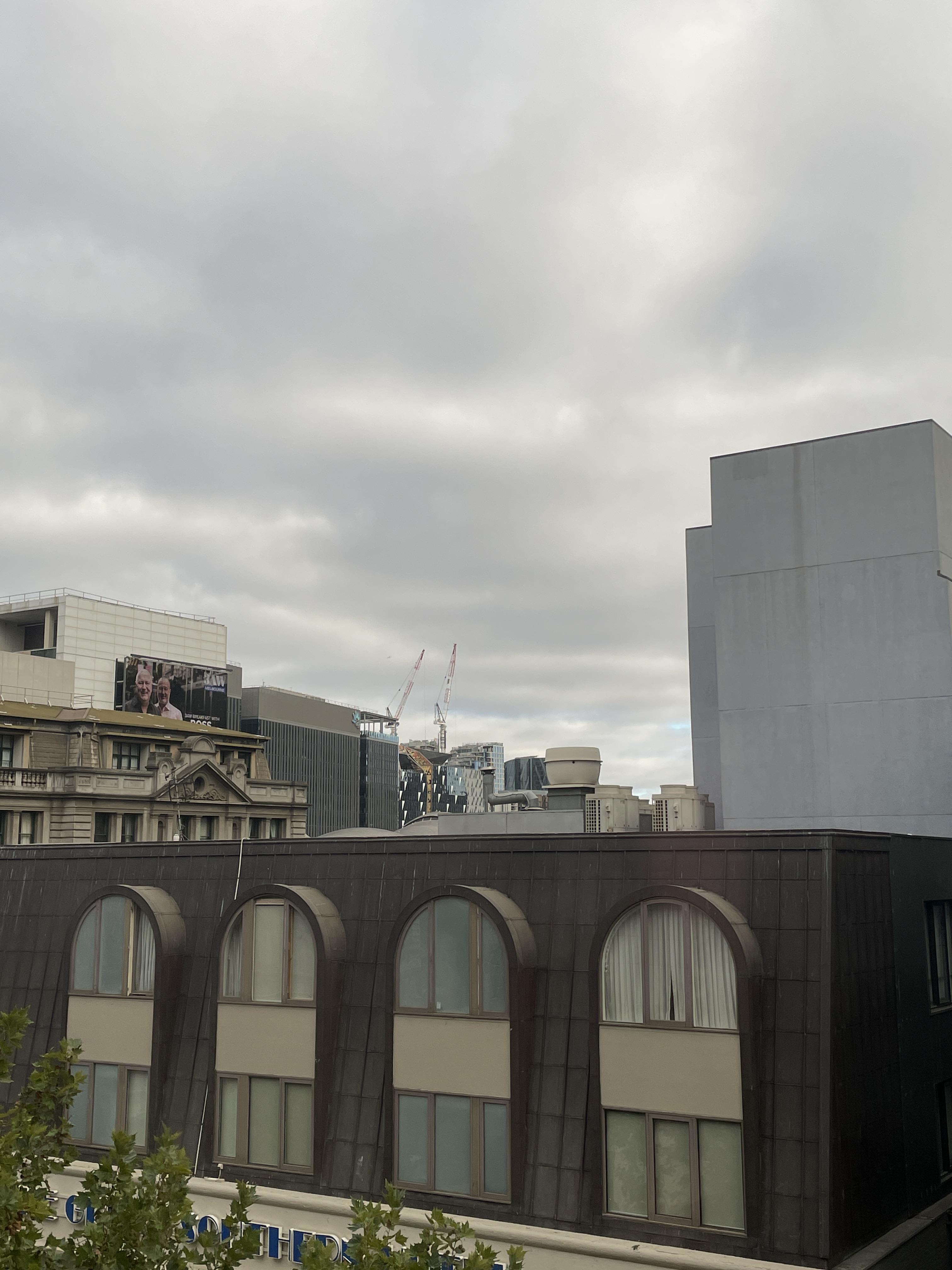

After looking through Melbourne in Google Maps I found a hotel that looked very similar to one in the photo, it’s the Great Southern Hotel.
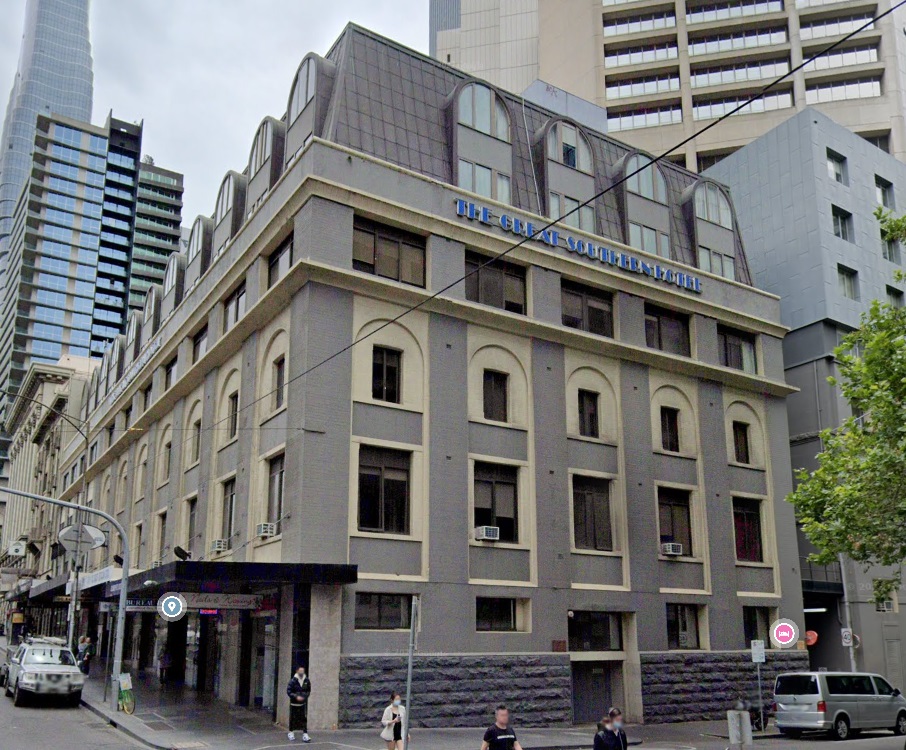
But I was initially wrong about the vantage point, I guessed Grand Hotel Melbourne. One of my team members (SubRosa1602) did get it right afterwards, the vantage point of the photo was Hotel Indigo Melbourne.
They’re Making Decoys
- category: osint
The Sergeant from Clarence asked one of the Corporals to patrol for Emus to keep the our fresh troops on their toes and maybe scare some discipline into them. They headed out to an area with lots of sightings reported though they never made it back. Some of the last images uploaded showed what looked to be the enemy, though it turned out to be decoys. These broom heads are getting clever. I’m guessing we’re not getting the camera equipment back…
Find the location (lattitude, longitude) of this area rounded to 4 decimal places and wrap it in
DUCTF{}, e.g.DUCTF{-25.3445,131.0354}
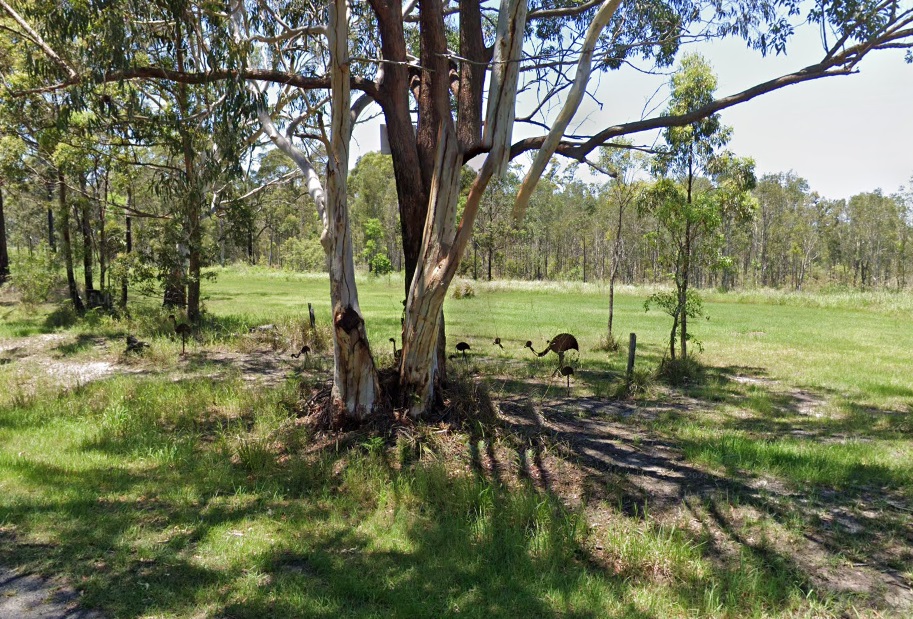
We had been looking in Clarence, New South Wales but the clue “These broom heads are getting clever” was more important. When looking for “Brooms Head Road” Ardemium finally found them, after also searching through Facebook posts.